

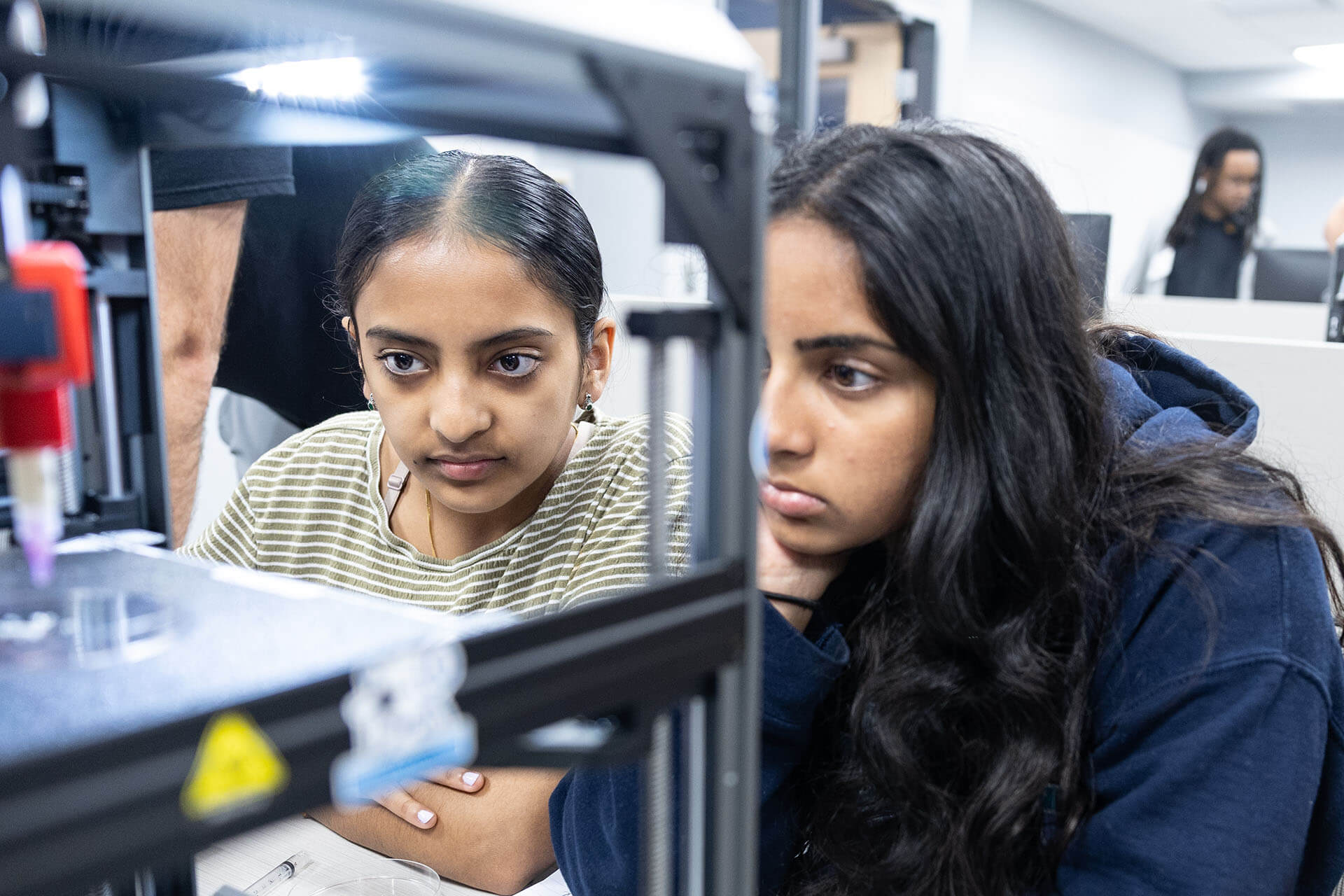
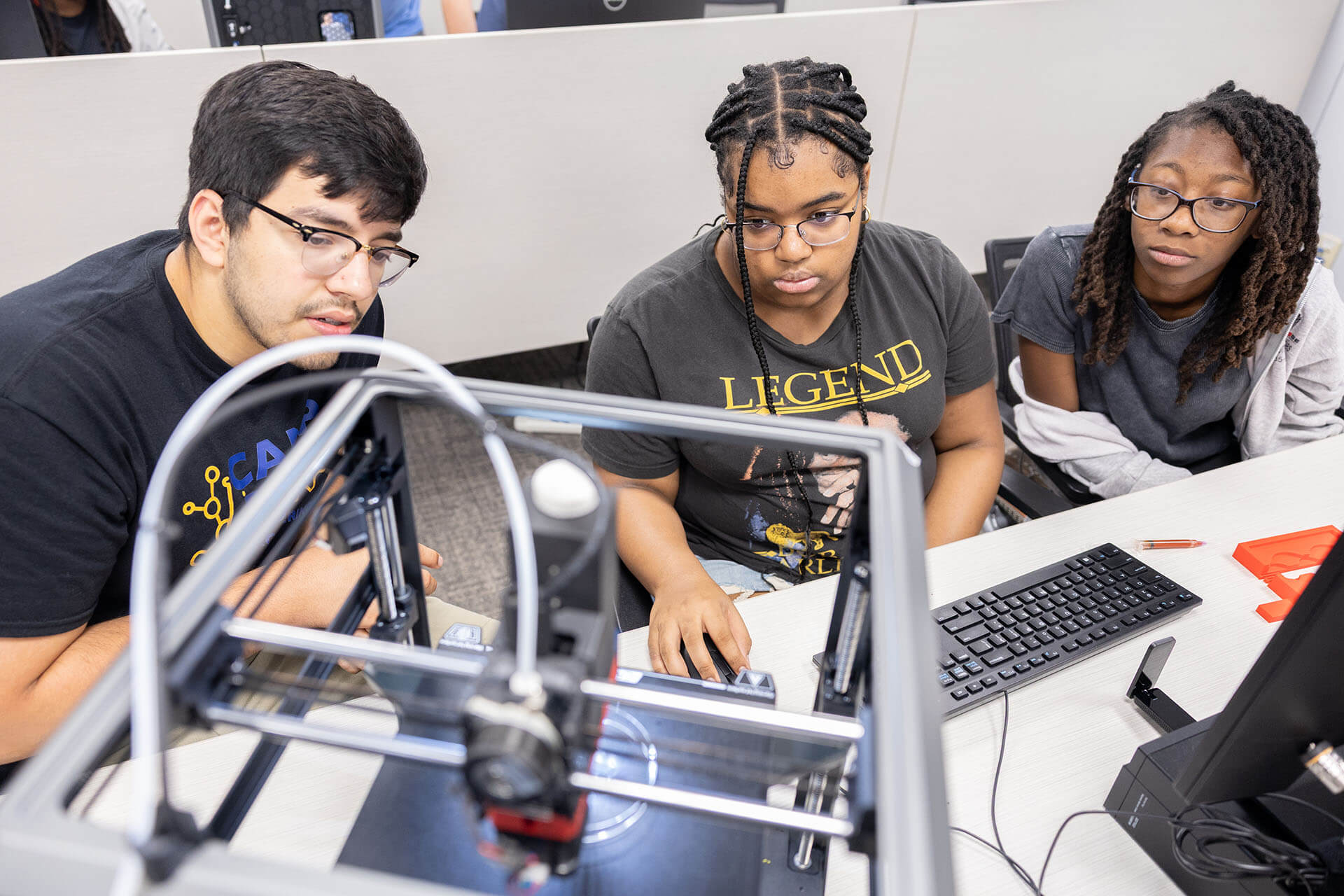
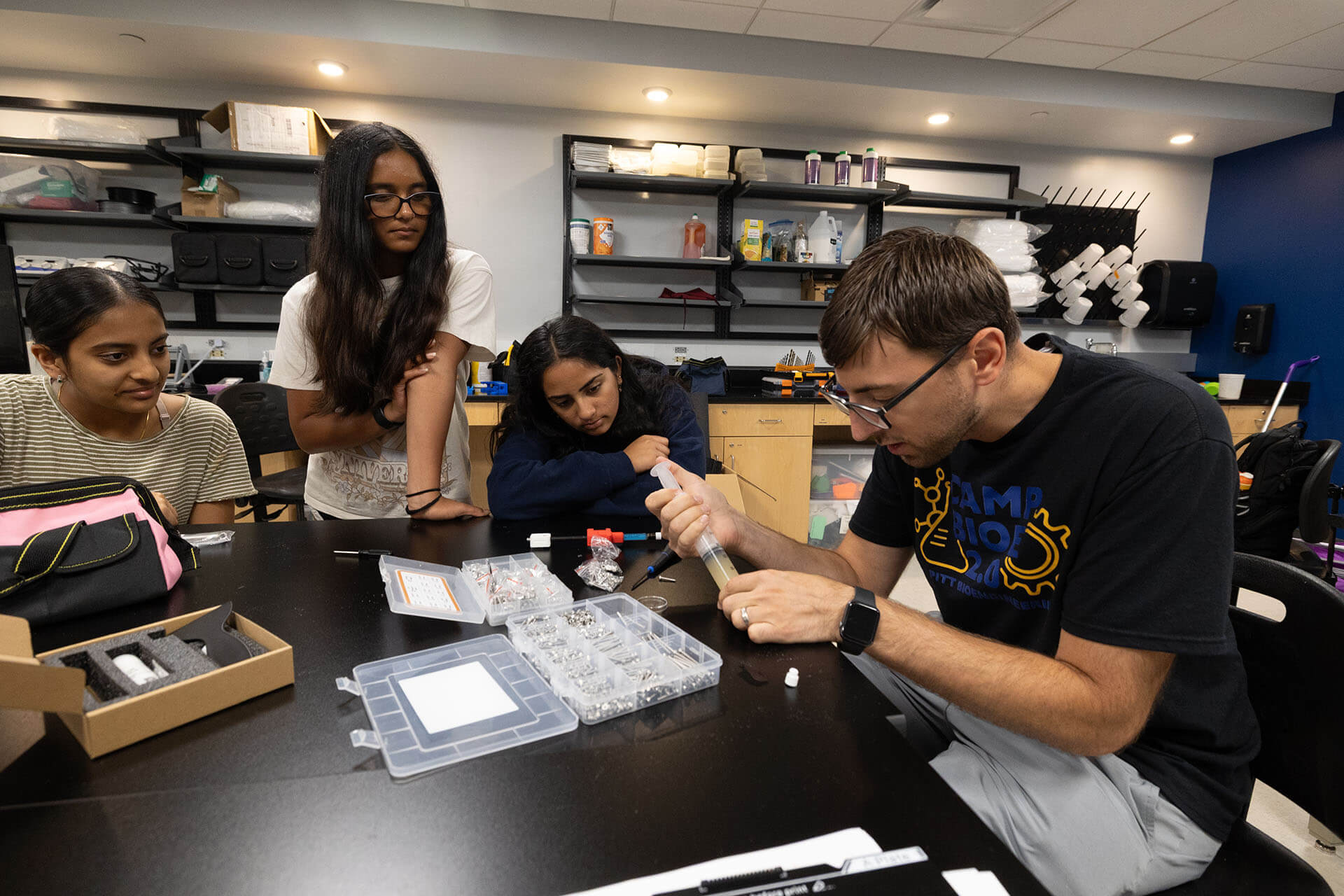
Dr. Dan Shiwarski introduces 3D bioprinting to CampBioE 2.0/VESSELS high school scholars. // Photo courtesy of Dan Shiwarski.
Each summer, Department of Medicine faculty invest in the next generation of scientists and physician-researchers by mentoring undergraduate and high school students through immersive research experiences. Across the department’s institutes and research centers, these programs provide hands-on laboratory training, professional development, and one-on-one mentorship while introducing students to careers in biomedical science and medicine.

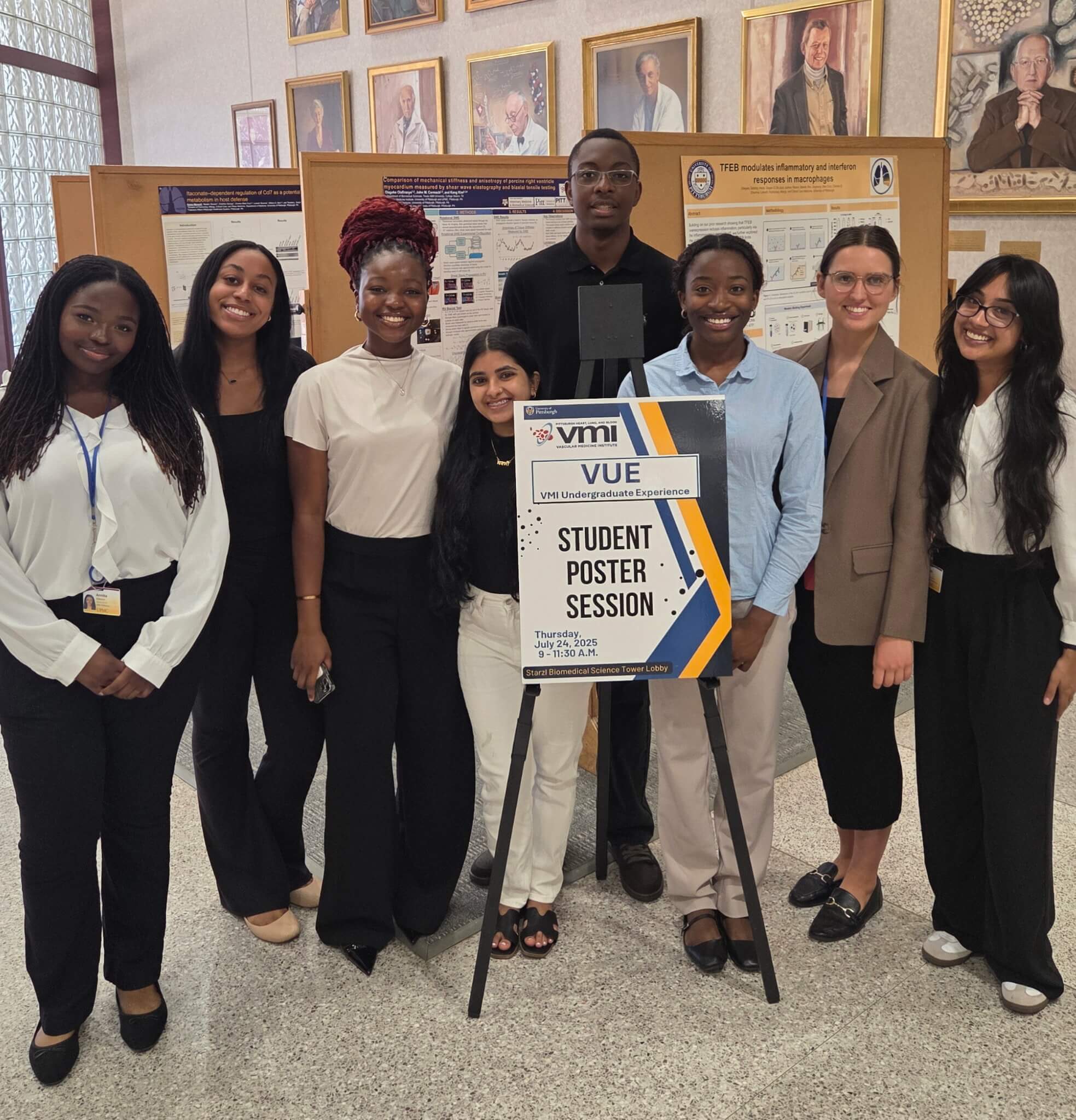
VMI Undergraduate Experience (VUE)
The Vascular Medicine Institute (VMI) hosts the VMI Undergraduate Experience (VUE), a competitive 10-week paid summer research program for undergraduate students interested in biomedical science, held on the University of Pittsburgh’s Oakland campus.
Each student is paired with a faculty mentor and spends the summer conducting hands-on biomedical research while participating in lectures, workshops, networking events, and career development activities. Research opportunities span areas including hematology, pulmonary medicine, cardiology, and sleep medicine, culminating in presentations at a summer research symposium.
“This year the VUE program brings together 15 undergraduate students from all around the country for an intensive, 10-week research program,” said Program Director Dr. Jesus Tejero. “We provide training in different aspects of research and medicine, from cutting-edge laboratory research to career development, to prepare the students for future careers in clinical and biomedical research.”
Vascular Educational Summer Session for Emerging Laboratory Scientists (VESSELS)
Offered in partnership with the University of Pittsburgh Department of Bioengineering’s CampBioE 2.0, the Vascular Educational Summer Session for Emerging Laboratory Scientists (VESSELS) program introduces students in grades 9-12 to advanced concepts in vascular bioengineering, tissue engineering, and 3D bioprinting.
Through an immersive, hands-on curriculum, students learn 3D computer-aided design (CAD), plastic 3D printing, and FRESH bioprinting while converting commercial 3D printers into functional bioprinters using open-source hardware and software. Working in teams, participants design and fabricate hydrogel-based vascular scaffolds, gaining firsthand experience with technologies that are advancing translational research and regenerative medicine.
The partnership with CampBioE 2.0, launched in 2025, created a new curriculum focused on advanced biofabrication and biomedical engineering. In addition to technical training, students apply engineering principles through collaborative design challenges that encourage creativity, problem-solving, and innovation. >> Read more about the collaboration
“This summer we have expanded the program from 16 high school scholars to 32, we have full participation and we added a second week,” said Program Director Dr. Daniel Shiwarski. “The program is growing and there remains a lot of interest. Students will learn 3D CAD modeling, plastic 3D printing, how to convert a plastic printer into a bioprinter, and how to perform FRESH 3D bioprinting. It is a lot of fun.”
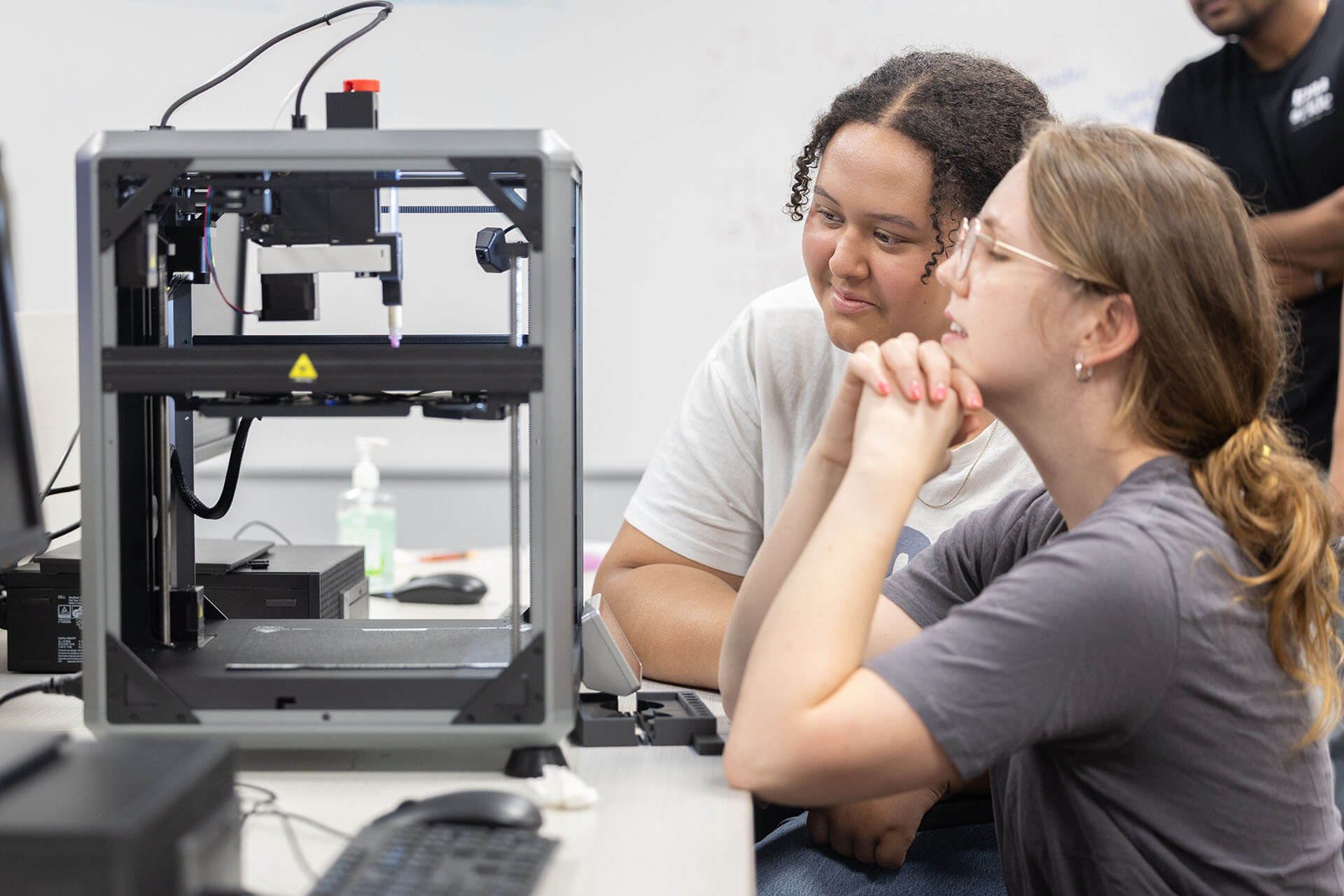
Photos courtesy of Dan Shiwarski.
UPMC Hillman Cancer Center Academy
Since 2019, the Aging Institute has participated in the UPMC Hillman Cancer Center Academy, an award-winning summer program that engages high school students in cutting-edge research and career preparation.
As part of the Technology Drive X research site, Aging Institute faculty mentor students through immersive laboratory experiences while exposing them to STEM career pathways. Throughout the summer, students attend weekly Tech Talks featuring faculty presentations, share their research progress during Work-in-Progress sessions, and culminate the program by presenting their research through a scientific abstract and public presentation.
This summer, the Aging Institute is hosting one Hillman Academy scholar, who is conducting research under the mentorship of Dr. Jay Tan. In total, 10 students are participating across the Technology Drive X site.


Investing in Tomorrow’s Scientific Leaders
While each program offers a unique experience—from biomedical laboratory research and vascular medicine to 3D bioprinting and aging research—they share a common goal: inspiring talented students to pursue careers in science, medicine, and biomedical research.
Through the dedication of Department of Medicine faculty, trainees gain valuable technical skills, professional mentorship, and early exposure to research environments that help prepare them for future success in graduate education, medical school, and scientific careers.